By Sheena Levian · Sheena Stone Journal

For most of the twentieth century, the question of what stone to choose for an engagement ring had one answer: a diamond. Diamonds were marketed as eternal, as the ultimate symbol of love, as the only stone worthy of so significant a commitment. And for decades, that story held.
But something has shifted. More and more women — and the partners who love them — are looking beyond the diamond and discovering a world of colored gemstones that are every bit as beautiful, often more meaningful, and in many cases far more distinctive than the stone that convention prescribed.
Colored gemstone engagement rings are not a new idea. Royalty and aristocracy wore sapphires, rubies, and emeralds on their engagement fingers for centuries before the diamond industry rewrote the rules. What is new is the confidence with which modern women are reclaiming that tradition and choosing the stone that speaks to them — rather than the one they were told to want.
This guide covers the most beautiful and enduring gemstone alternatives to diamonds. For each stone, we cover what makes it special, what to look for when buying, how durable it is for daily wear — and perhaps most usefully, what kind of woman tends to be drawn to it. Because a gemstone, like a piece of music or a work of art, is never entirely neutral.
Sapphire: The Royal Choice — and Why It Suits the Woman Who Knows Her Own Mind

Of all the colored gemstone engagement rings, the sapphire is the most established and the most universally recognized. Its deep, velvety blue has symbolized fidelity, wisdom, and nobility for thousands of years — and its association with royal engagements, most famously Princess Diana's oval sapphire which passed to Catherine, Princess of Wales, has only deepened its romantic resonance.
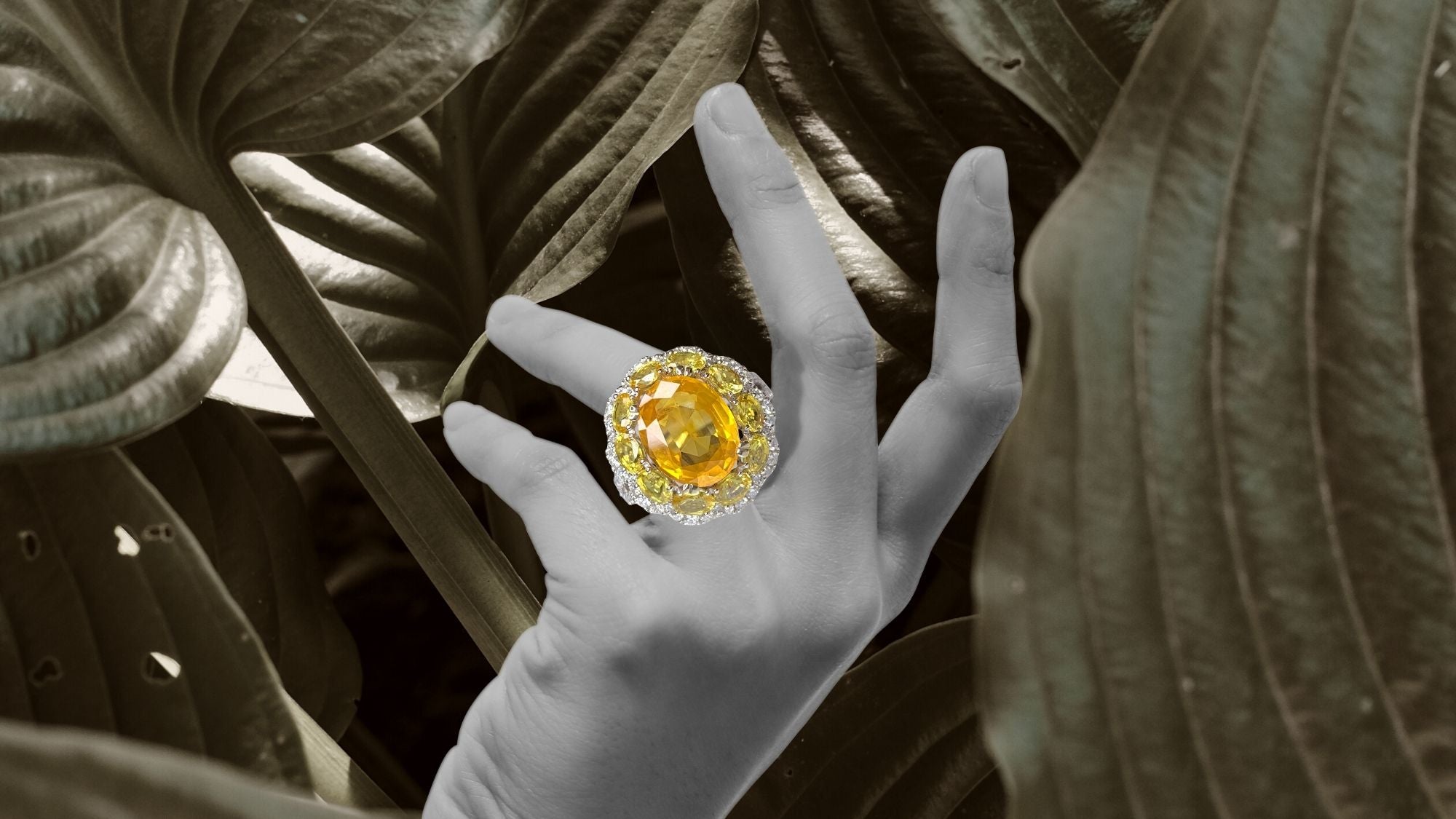
But sapphire is far more than its most famous example. The stone comes in an extraordinary range of colors — from the classic deep cornflower blue to pale icy blue, rich violet, warm peachy-pink known as Padparadscha, vivid yellow, and deep green. Each color variety has its own character and its own devoted following.
From a practical standpoint, sapphire is an exceptional choice for daily wear. It ranks 9 on the Mohs hardness scale — second only to diamond — meaning it is highly resistant to scratching and well-suited to a lifetime of wear. A fine sapphire, properly cared for, will look as beautiful in fifty years as it does today.
✦ The woman who chooses a sapphire tends to know exactly who she is and has little interest in following convention for its own sake. She appreciates depth — in gemstones, in people, in life — and is drawn to things with genuine history behind them.
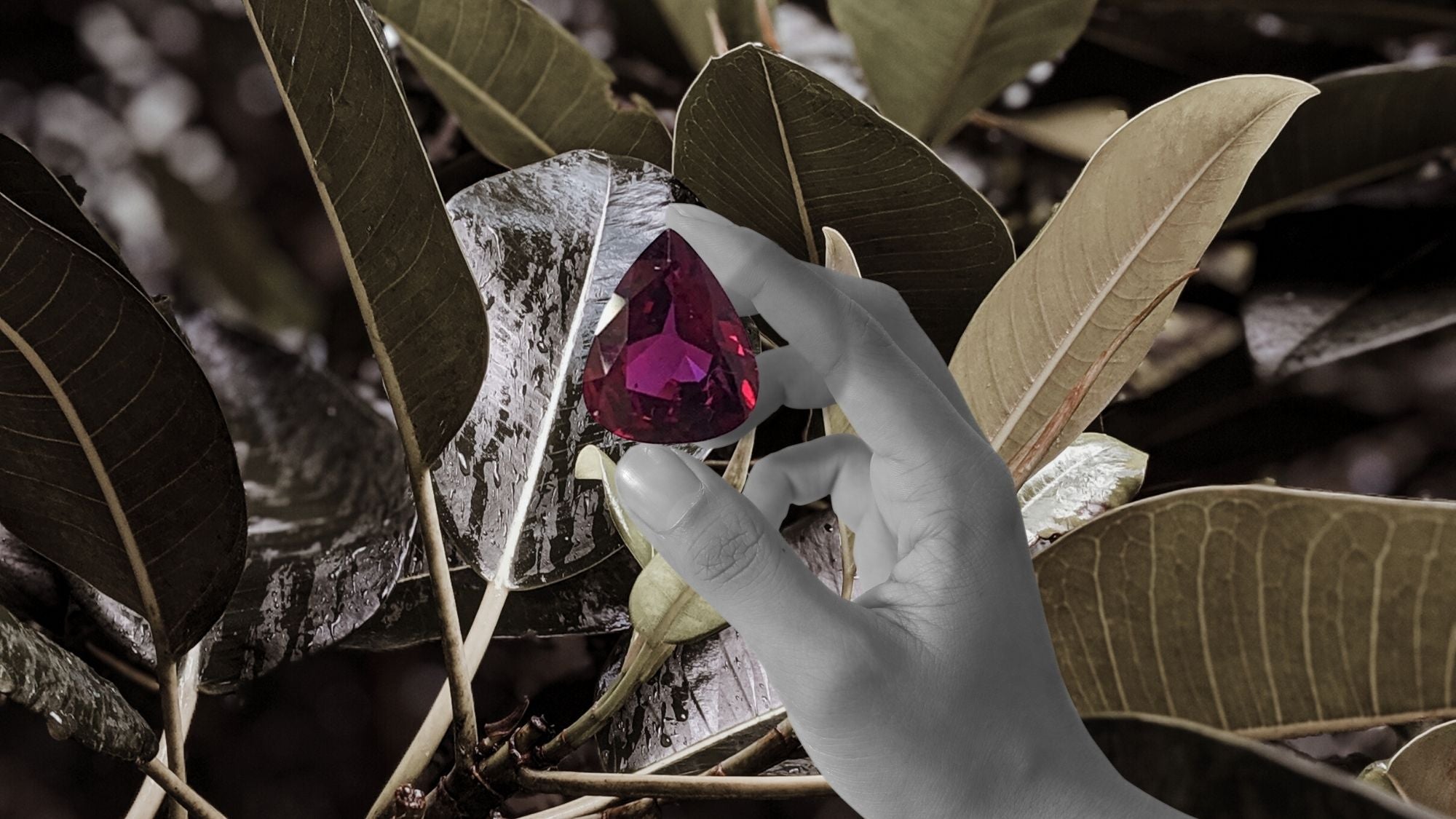
Ruby: The Stone of Passion — for the Woman Who Does Not Do Things Quietly
 If the sapphire is the stone of wisdom and fidelity, the ruby is the stone of passion, courage, and love in its most ardent form. The finest rubies — deep, vivid red with a slight blue undertone that jewelers call pigeon's blood — are among the rarest gemstones in the world, rarer even than comparable diamonds.
Ruby shares sapphire's geological origins — both are varieties of corundum — and therefore shares its exceptional hardness of 9 on the Mohs scale. This is a stone you can wear for a lifetime without concern. Vintage Burmese rubies from the early and mid twentieth century, before the finest deposits became depleted, often display a depth of color that modern rubies rarely match. Finding a fine vintage ruby ring is finding something genuinely rare.
The emotional symbolism of a ruby engagement ring is powerful and unmistakable. Throughout history, rubies have been associated with the heart, with vitality, and with a love that is bold rather than quiet. A ruby ring is a declaration.
✦ The woman who chooses a ruby is expressive, warm, and entirely comfortable being the most vivid presence in a room. She loves deeply and shows it. She chose red because she meant it.
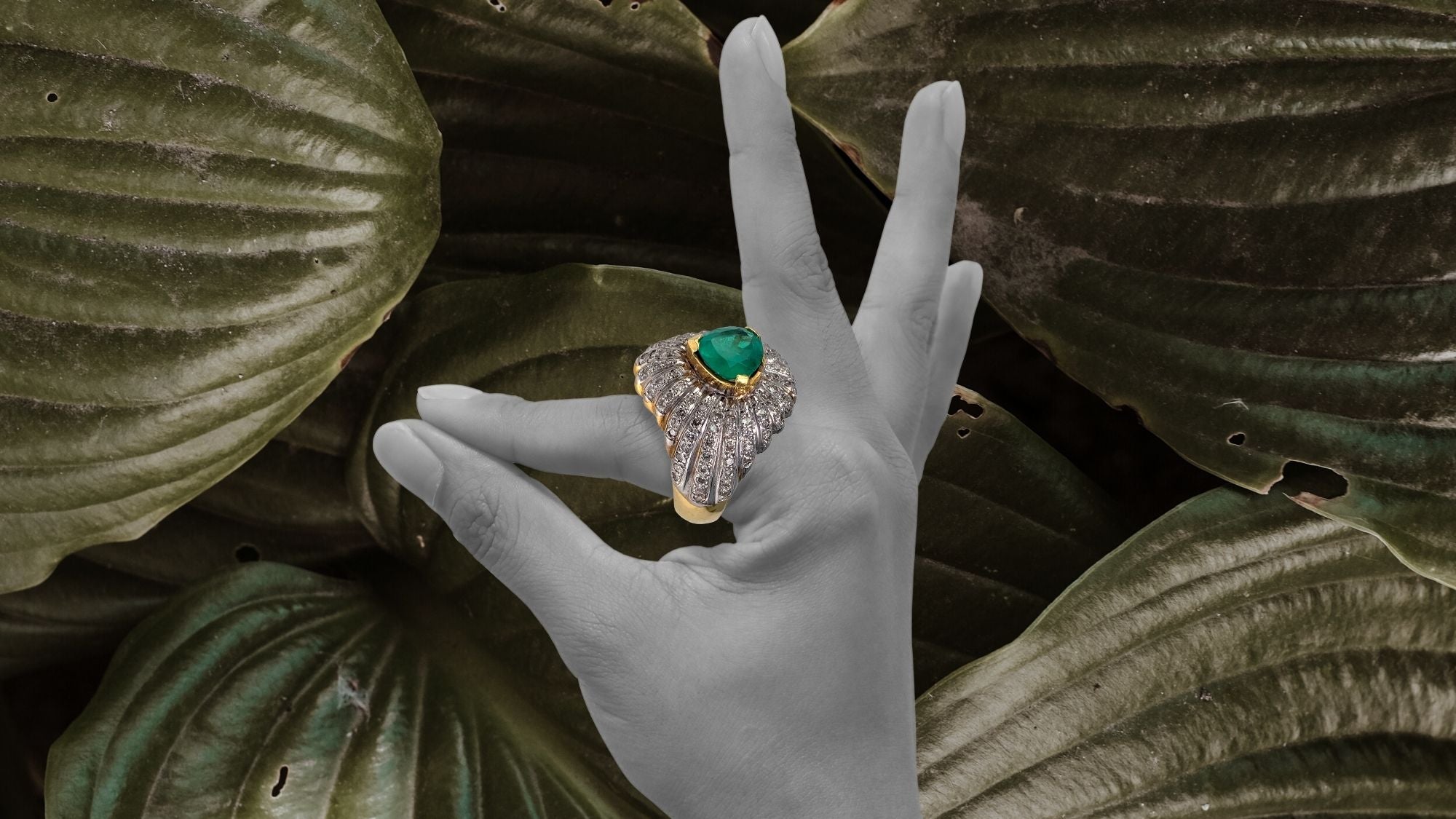
Emerald: The Stone of Growth — for the Woman Who Sees the World in Color
 There is no green in the natural world quite like the green of a fine emerald. It is a color that feels alive — rich, deep, and luminous in a way that no other stone replicates. Emeralds have been prized since antiquity: Cleopatra was famously devoted to them, and they have adorned the crowns of royalty across every civilization that had access to them.
One of the most important things to understand about emeralds is that inclusions — the tiny fractures and mineral crystals within the stone — are not only normal but expected. Jewelers call this internal landscape the jardin, the French word for garden. A completely inclusion-free emerald is extraordinarily rare. The character of the jardin is part of what makes each emerald entirely unique — a fingerprint that belongs to no other stone in the world.
Emerald ranks 7.5 to 8 on the Mohs scale — durable enough for a well-cared-for engagement ring, though requiring slightly more care than sapphire or ruby. For the woman who loves beauty and treats her jewelry with the attention it deserves, an emerald ring is one of the most spectacular choices she can make.
✦ The woman who chooses an emerald sees life in rich color and has a deep appreciation for things that grow, change, and reveal themselves over time. She is drawn to beauty that has depth — that rewards looking closely.
Aquamarine: Serene and Underrated — for the Woman With Quiet Confidence
 Aquamarine is one of the most underrated gemstones in the engagement ring market — which means it is also one of the best opportunities for a woman who wants something genuinely beautiful without paying a premium driven entirely by fashion.
The stone — a variety of beryl, making it a close relative of emerald — ranges in color from the palest icy blue to a rich blue-green that evokes clear tropical waters. Its name comes from the Latin for sea water, and the comparison is perfectly apt. Aquamarine has an excellent hardness of 7.5 to 8 on the Mohs scale and a clarity that makes it particularly suited to larger cuts — emerald cuts, oval cuts, and cushion cuts all showcase its color and brilliance beautifully.
✦ The woman who chooses an aquamarine has a quiet confidence and a refined aesthetic. She is drawn to beauty that reveals itself gradually rather than announcing itself immediately. She is serene in a way that people often mistake for simplicity — until they know her better.
Morganite: Warmth and Romance — for the Woman Who Wears Her Heart Openly
 Morganite has become one of the most popular colored gemstone engagement ring choices of recent years, and it is entirely understandable why. Its soft, peachy-pink color has a warmth and femininity that is immediately appealing, and paired with rose gold — which has risen dramatically in popularity over the same period — it creates a harmony of warm tones that is distinctly and unashamedly romantic.
Like aquamarine, morganite is a variety of beryl, ranking 7.5 to 8 on the Mohs scale — durable enough for daily wear with reasonable care. It is typically found in large, clean crystals, making it well-suited to the larger stone sizes that many engagement ring buyers prefer. And because it is less rare than sapphires or rubies, an excellent morganite can be found at a price point that makes a larger, more visually impressive stone accessible.
✦ The woman who chooses a morganite is romantic and warm and entirely comfortable with softness. She would rather her jewelry feel like an embrace than a statement — though the two are not mutually exclusive, and she knows it.
Alexandrite: The Most Extraordinary Stone — for the Woman Who Loves a Secret
 Alexandrite is perhaps the most extraordinary gemstone in the world for one simple reason: it changes color. In daylight, a fine alexandrite appears a vivid blue-green. In incandescent light — candlelight, warm lamp light, firelight — it shifts to a rich raspberry red. The effect, when you see it for the first time, is genuinely startling.
Named after Tsar Alexander II of Russia, where it was first discovered in 1830, alexandrite has been associated with good fortune and the balance of opposites — its color change seen as a symbol of the complexity and richness of a deep relationship. Fine natural alexandrite is extraordinarily rare. Lab-created alexandrite displays the same remarkable color-change phenomenon at a fraction of the price, and for many buyers the experience of the stone matters more than its origin.
✦ The woman who chooses an alexandrite delights in complexity and the unexpected. She is someone who contains multitudes and is entirely comfortable with that. She appreciates things that reveal different facets of themselves depending on the light.
How to Choose the Right Stone for You.
 The right gemstone for an engagement ring is ultimately a deeply personal choice, and there is no wrong answer beyond choosing something you do not truly love.
A few practical questions are worth considering. How do you use your hands day to day? Sapphire and ruby handle the most demanding daily wear; emerald and morganite require a little more care. Do you have a strong color instinct? Trust it — the women who choose colored gemstones almost always describe knowing immediately which stone was right for them. Are you drawn to rarity and historical significance, or to accessibility and immediate beauty? All of these are valid starting points for a decision that will be worn every day for the rest of your life.
Vintage gemstone rings offer a particular advantage: the stones were often selected and cut by jewelers working at the height of their craft, with an eye for color and character that mass production cannot replicate. A vintage sapphire or ruby ring from our Vintage Vault is not just a piece of jewelry — it is a choice to wear something that has already proven its beauty across decades.
Explore our Vintage Vault and Treasure Trove collections at Sheena Stone — hand-curated gemstone rings and loose stones for women who want something genuinely beautiful, genuinely rare, and genuinely their own.
© Sheena Stone · sheenastone.com ·