By Sheena Levian · Sheena Stone Journal

There is something unmistakably special about a piece of vintage jewelry. It has been worn before — perhaps on a woman's wedding day, or passed between generations, or discovered in a Parisian estate sale decades ago. It carries a story you will never fully know, and that mystery is part of the magic.
But if you have ever stood in front of a vintage jewelry case feeling a little overwhelmed — wondering what to look for, how to tell quality from imitation, or whether a piece is worth its price — you are not alone. Buying vintage fine jewelry is an art, and like all arts, it rewards those who take a little time to learn the craft.
This guide is here to help. Whether you are shopping for yourself, looking for a gift with genuine meaning, or quietly building a collection you will treasure for decades, here is everything you need to know about buying vintage jewelry with confidence.
What Exactly Is Vintage Jewelry?

The terms vintage, antique, and estate are often used interchangeably, but they have distinct meanings in the jewelry world.
Antique jewelry is at least 100 years old — think Art Nouveau or Edwardian pieces. Vintage jewelry typically refers to pieces from the 1920s through the 1980s, spanning iconic eras like Art Deco, Retro, and Mid-Century Modern. Estate jewelry simply means previously owned fine jewelry, regardless of age.
For most buyers, the sweet spot is vintage: old enough to have genuine character and historical beauty, yet not so rare that it becomes difficult to find or prohibitively expensive.
Why Vintage Jewelry Is Worth It
Vintage jewelry doesn't follow trends — it sets them. The same Art Deco ring that graced a 1930s dinner table looks breathtaking at a modern wedding.
There are good reasons so many women are returning to vintage jewelry as their first choice — not a last resort.
✦ Craftsmanship that is rarely replicated today. Many vintage pieces were made by hand in an era when jewelry production was slower and more meticulous. Filigree settings, hand-engraved shanks, and hand-set stones are hallmarks of older fine jewelry that mass production simply cannot replicate.
✦ Stones that are genuinely exceptional. Older gemstones were often cut to maximize beauty in candlelight. Old European cut and Old Mine cut diamonds have a warmth and depth that many buyers find irresistible.
✦ A more sustainable choice. Choosing a pre-loved piece means no new mining, no new production footprint. For many women today, that matters deeply.
✦ Value that holds. Well-selected vintage fine jewelry tends to hold or appreciate in value over time, particularly pieces featuring high-quality gemstones in classic styles.
The Major Vintage Eras — and What Makes Each Special

Knowing the major jewelry eras helps you recognize what you are looking at — and develop your own taste.
Art Deco (1920s–1930s) is defined by geometry, symmetry, and the bold combination of white metals with vivid gemstones. Think platinum, emeralds, onyx, and diamonds arranged in angular, graphic patterns. Art Deco pieces are among the most sought-after in the vintage market.
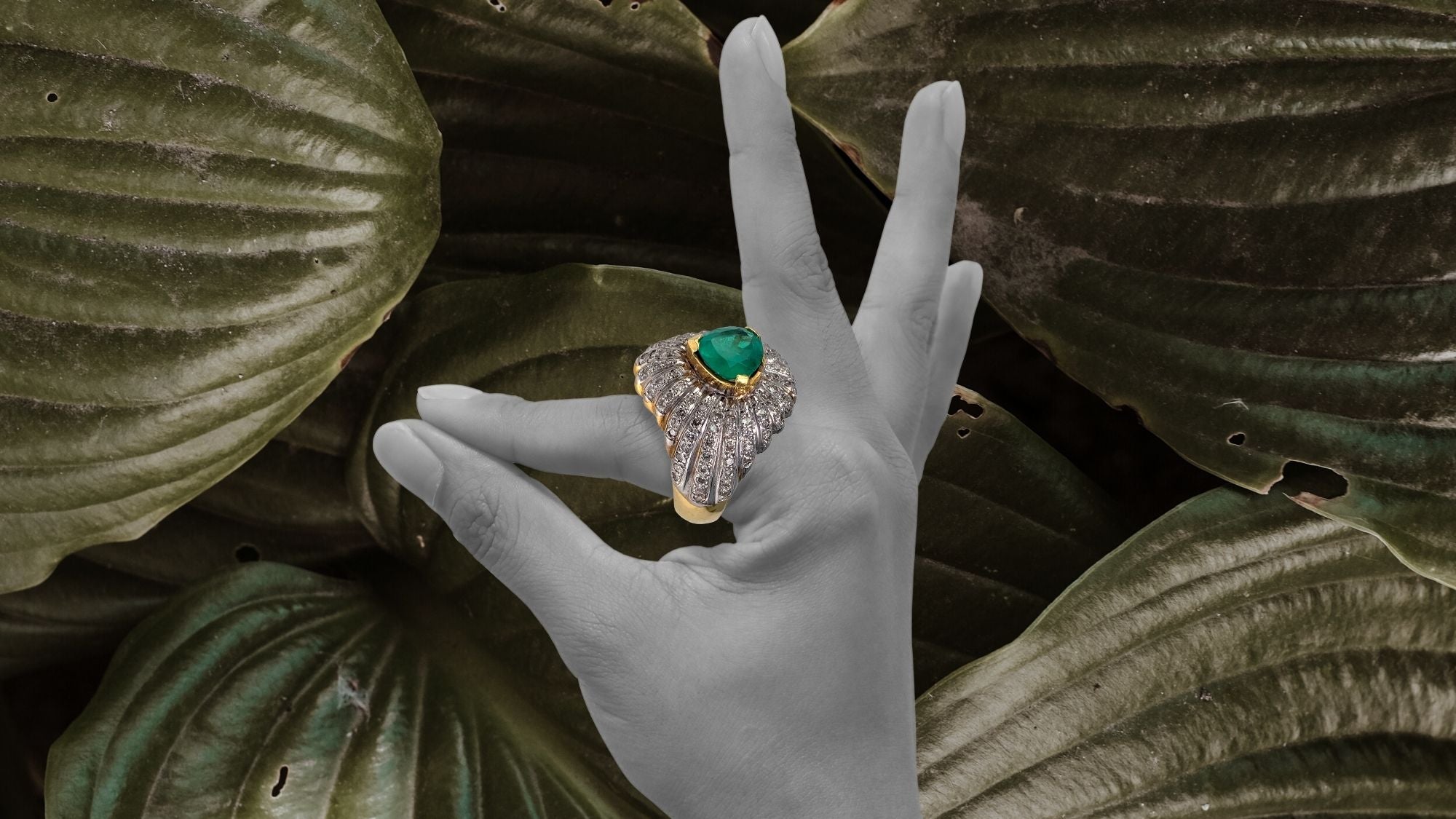
Retro (1940s–early 1950s) jewelry emerged during and after World War II, when platinum was rationed for military use. Yellow and rose gold dominate this era, with bold, sculptural designs — oversized bows, floral motifs, and wide cocktail rings. Retro pieces have a warmth and confidence that feels completely modern today.
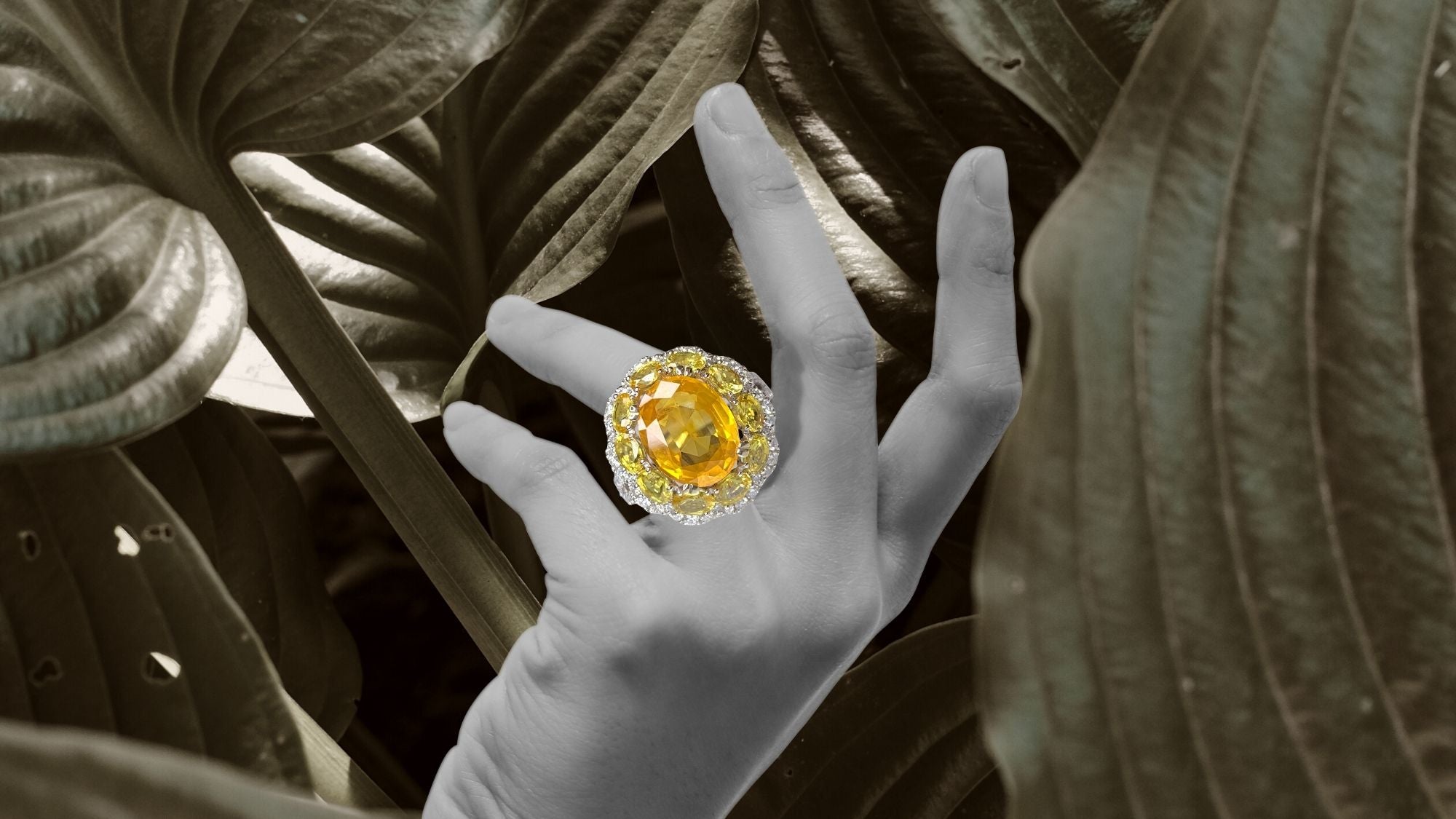
Mid-Century Modern (1950s–1960s) reflects the optimism of the postwar era: starbursts, abstract shapes, and bright, saturated gemstones — this is the era of the cocktail ring in full bloom.
Late Vintage (1970s–1980s) brought a yellow gold revival, chunky chains, and layering. Pieces from this period tend to be more affordable, making them a wonderful entry point for first-time vintage buyers.
What to Look For When Shopping Vintage

Whether you are shopping in person or online, there are a few things every buyer should check.
Look at the hallmarks. Fine vintage jewelry will usually carry metal stamps — 14K, 18K, 950 for platinum, 925 for sterling silver. These are your first quality signal.
Examine the setting. Prongs should be even, secure, and not worn to sharp points. Bezel and pavé settings should be smooth with no raised edges.
Check the stones. Look for chips, cracks, or cloudiness in the center stone. Large dark inclusions that affect brilliance are worth noting.
Ask about condition and history. A reputable seller should be able to tell you the approximate age, metal type, stone identity, and any repairs that have been done. Transparency is a green flag.
Think about wearability. Some very delicate antique pieces are better suited as occasional-wear jewelry. Consider how you intend to wear a piece before purchasing.
How to Style Vintage Jewelry Today
The secret to wearing vintage well is confidence. A single statement piece — a bold cocktail ring, a sculptural brooch — does all the work.
Let one piece lead. Vintage jewelry is often bold enough to stand alone. Choose your hero piece and let everything else play a supporting role.
Mix eras with confidence. There are no strict rules about mixing vintage and contemporary. An Art Deco pendant worn with modern gold studs is entirely chic.
Brooches are having a moment. A brooch can be worn on a lapel, pinned to a scarf, attached to a handbag, or used as a hair accessory. They are endlessly versatile.
Layer with restraint. If layering vintage rings or necklaces, stick to a consistent metal tone — all gold or all silver — to keep the look cohesive rather than chaotic.
Buying Vintage as a Gift
Vintage jewelry makes one of the most meaningful gifts a person can give — precisely because it is not mass-produced. It says: I thought about you specifically. I found this for you.
For milestone occasions — a significant birthday, a retirement, a wedding anniversary, a graduation — a vintage piece carries emotional weight that a brand-new piece simply cannot match. It is a gift with a past and a future.
If you are buying for someone else, consider their everyday style: Do they tend toward delicate and understated, or bold and expressive? Do they prefer gold or silver tones? A vintage piece that suits their aesthetic will be worn and loved for decades.
A Note on Buying Vintage Online
Buying vintage jewelry online requires a bit more diligence than shopping in person, but with the right seller it is entirely safe — and often how you find the most extraordinary pieces.
Look for sellers who provide multiple high-resolution photos from different angles, clear descriptions of metal type and gemstone identity, information about any prior repairs or restorations, and a reasonable return policy.
At Sheena Stone, every piece in our Vintage Vault is hand-curated and described in full detail so you can shop with complete confidence — whether you are in New York or anywhere in the world.
The Piece That Was Meant to Find You
There is a reason the vintage jewelry market has grown so steadily in recent years. Women are looking for something more meaningful than the newest trend — they want jewelry that has soul, that has lasted, that will last again.
When you find the right vintage piece, you will know. There is a particular feeling — call it recognition — that happens when a ring fits your hand in a way that feels predestined, or when a brooch seems to have been designed for your favorite coat.
That feeling is worth chasing. And we are here to help you find it.
Browse the Sheena Stone Vintage Vault — a hand-curated collection of fine vintage rings, earrings, pendants, and brooches, sourced for women who value beauty, craft, and history.